

Discover
-
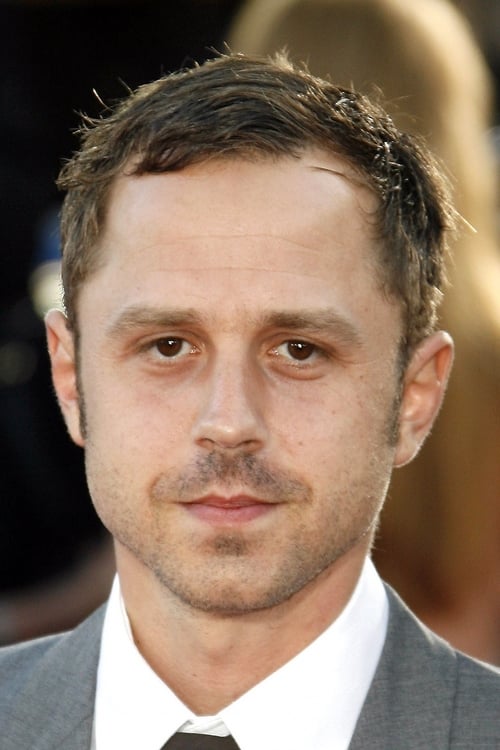
Giovanni Ribisi
Thanks -

Paul Thomas Anderson
Director -

Maya Rudolph
Thanks -

Martin Brest
Thanks -

Tim Rigby
Stunts -

Clay Cullen
Stunts -

Jonny Greenwood
Original Music Composer -

Chris O'Hara
Stunts
-
 DosAnjos
11/30/2025 5:46:52PM
Wow, what a wild ride. You’re constantly on the edge of your seat. If you’re looking for a cozy, relaxing night at the movies, forget it.. your chair will be yanked out from under you. There’s no room for comfort or rest here. It’s masterful.
-
badelf
12/26/2025 12:10:29PM
Paul Thomas Anderson's "One Battle After Another", from Thomas Pynchon's novel, is recognizably a PTA film, yet profoundly different in ways that set it apart from everything he's done before. This is Anderson evolving, and stepping into territory he's previously only circled. For the first time, PTA is blatantly political and urgently timely. He tackles immigration and racism with direct engagement, addressing issues currently tearing through the United States. The "Christmas Adventurers Club," a white supremacist secret society, is openly satirical, bordering on actual humor. This is a radical departure from the subtle, slow-burn treatments of American corruption in "There Will Be Blood" or "The Master." Here, Anderson isn't dancing around the subject; he's naming it, mocking it, dismantling it. This satire isn't just thematic window dressing; it drives the entire plot. The moral lines are far more pronounced than in Anderson's typical work, where ambiguity reigns and characters exist in ethical gray zones. In "One Battle After Another," we know who the villains are, and Anderson wants us to know. The second clear departure is the clean, optimistic, and almost conventional ending. While PTA is known for character-driven scripts that often don't resolve, or only loosely do so, this film offers resolution. Two bad guys die, one by the hand of Willa (Chase Infiniti), signaling her continuation of her mother's revolution. It's hopeful. It's clear. It's decidedly not the PTA we knew. Yet for all these departures, the film succeeds because of its performances. Sean Penn and Leonardo DiCaprio deliver brilliant work, finding PTA's typical wounded, broken, ambiguous characters within otherwise clearly defined roles. DiCaprio especially discovers the satire and humor in the film without ever breaking character, threading a needle between comedy and tragedy that few actors could manage. "One Battle After Another" is Paul Thomas Anderson standing up, speaking out, and proving that evolution doesn't mean compromise.
-
 The Fixate & Binge Podcast, w/ Joe Curdy
7/29/2026 10:33:09PM
No matter how you approach Paul Thomas Anderson's **ONE BATTLE AFTER ANOTHER** whether broadly or myopically, the film has many stories to tell that expand or contract however we view it. On a larger scale, the film is about the oppressive strictures governing society that turn whole swaths of the downtrodden into a community of masses huddled together -- and the revolutionary agents who seek to overthrow these draconian bulwarks. On a smaller scale, the film is also about the bonds between a father and a daughter and the turbulent past that inevitably superimposes itself on the present, threatening to tear asunder those very powerful bonds. Filmed in VistaVision, the second film in the 21st century since last year's acclaimed **THE BRUTALIST** -- PTA's film, much like the story, is epic in its larger themes and equally poignant in its more intimate interactions. VistaVision particularly excels with panorama as well as close-ups, two tonally valuable facets of filmmaking that soar in **ONE BATTLE AFTER ANOTHER**. Twinned with PTA's frequent musical collaborator, Radiohead's Jonny Greenwood -- their sixth collaboration that is on track to match that of Spielberg and John Williams -- the percussive, jangly score carries us along with adrenaline-charged intensity and occasional rise and fall intonations that embrace the anarchy of the film itself. Lighter moments, even humorous ones, are perfectly balanced by Greenwood's score and it's long past time for the Academy to bestow its honors or further risk artistic obsolescence. PTA's film begins in the chaos of homegrown revolutionaries -- the French 75 -- a far-left, revolutionary group who are actively liberating immigrants in detainment camps along the California/Mexico border, targeting banks and military border security agents in the name of establishing a counterculture new order in an America increasingly controlled by Conservative Nationalists. Adapted from Thomas Pynchon's 1990 novel ***'Vineland'*** -- a postmodern novel set against the backdrop of California in 1984 during Ronald Reagan's re-election -- PTA's **ONE BATTLE AFTER ANOTHER** offers a very close analogue to Pynchon's novel, with Leonardo DiCaprio playing fellow revolutionary saboteur leader Pat Calhoun/Bob Ferguson, a bomb specialist alongside Perfidia Beverly Hills -- played by Teyana Taylor. It is is their revolutionary pairing that results in the birth of a daughter, that puts their relationship at the crossroads. Pursued by the aptly named Col. Steven J. Lockjaw, portrayed by Sean Penn in what must be an award-winning performance, soon the French 75 are disbanded after key members of the group are captured. Sixteen years later, and living under an assumed name, DiCaprio's "Bob" (whose revolutionary days seem long behind him, lost in a haze of bong resin and brunchtime shots of Scotch) is single-father to Willa Ferguson, the incredible film debut of Chase Infiniti, living almost off-grid in northern California. When the relentless Col. Lockjaw once again is back in pursuit of the disbanded members of the French 75 -- DiCaprio's Bob and Willa find themselves barely able to keep one foot ahead of the long arm of the law. Relying on a network of committed locals, memorably from Willa's own Taekwondo Instructor, the scene-stealing Benicio Del Toro as Sensei Sergio St. Carlos who is revealed to be a major figure in the underground railroad movement for undocumented immigrants, the latter half of the film becomes a thrilling pursuit that culminates in one of the most cinematic endings seen. There is so much to enjoy in PTA's **ONE BATTLE AFTER ANOTHER**, with performances from DiCaprio, Infiniti, Taylor, Regina Hall, Del Toro, and especially Penn that are more than enough to hold our attention for the 2 hours and 45 minute runtime that seemingly flies by on the wings of pure cinema. Is it PTA's all-time masterpiece? I'll hold my tongue on that one -- but it's surely in the conversation.


Jena Malone
Greeting Code (voice)Leonardo DiCaprio
BobBenicio del Toro
Sensei Sergio St. CarlosSean Penn
Col. Steven J. LockjawRegina Hall
DeandraTeyana Taylor
PerfidiaTony Goldwyn
Virgil ThrockmortonKevin Tighe
Roy More